Housing Affordability in Windsor, Ontario (Part I)
Housing affordability has become one of the most important economic issues facing residents in Windsor, Ontario. While incomes have increased over the past decade, rental costs have also risen, making it increasingly difficult for households to keep pace with housing expenses.
To assess whether rent has become more or less affordable over time, we answer the question: How much of their income does the average Windsor resident need to spend on rent?
Note, generally:
Less than 30% of income spent on rent is considered affordable
30%-50% is considered moderate housing stress
Above 50% is considered severe housing stress
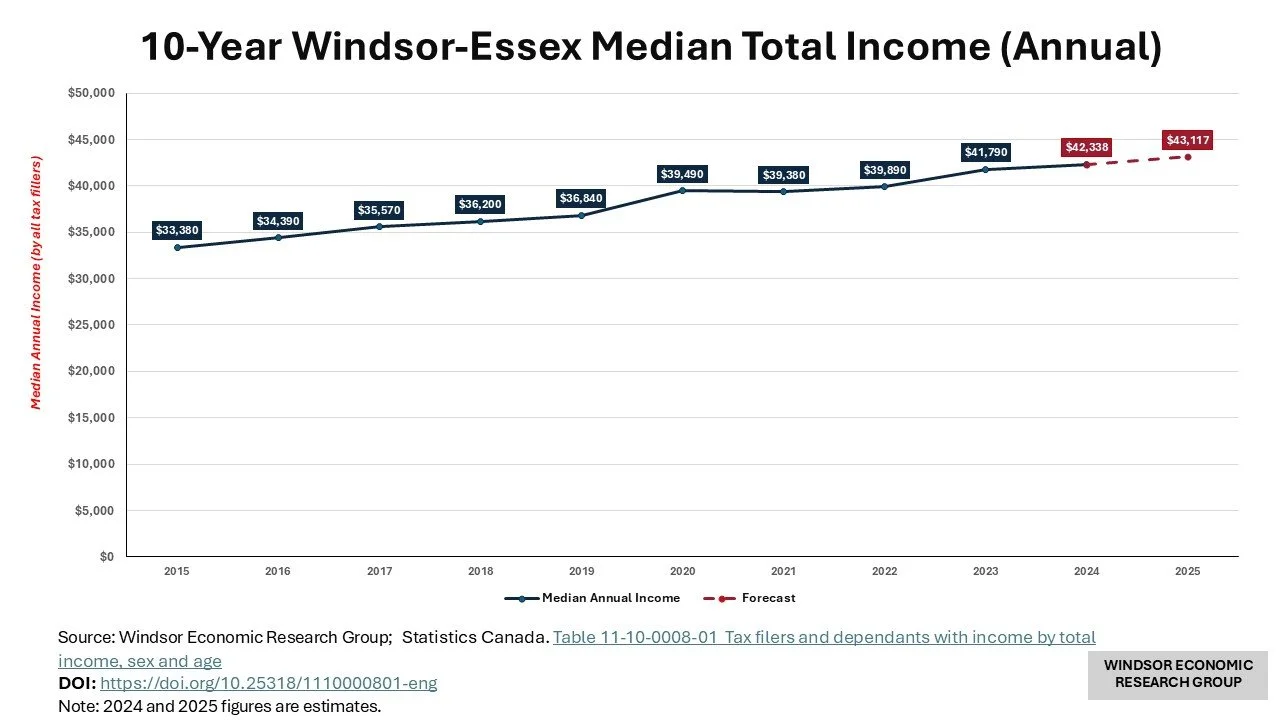
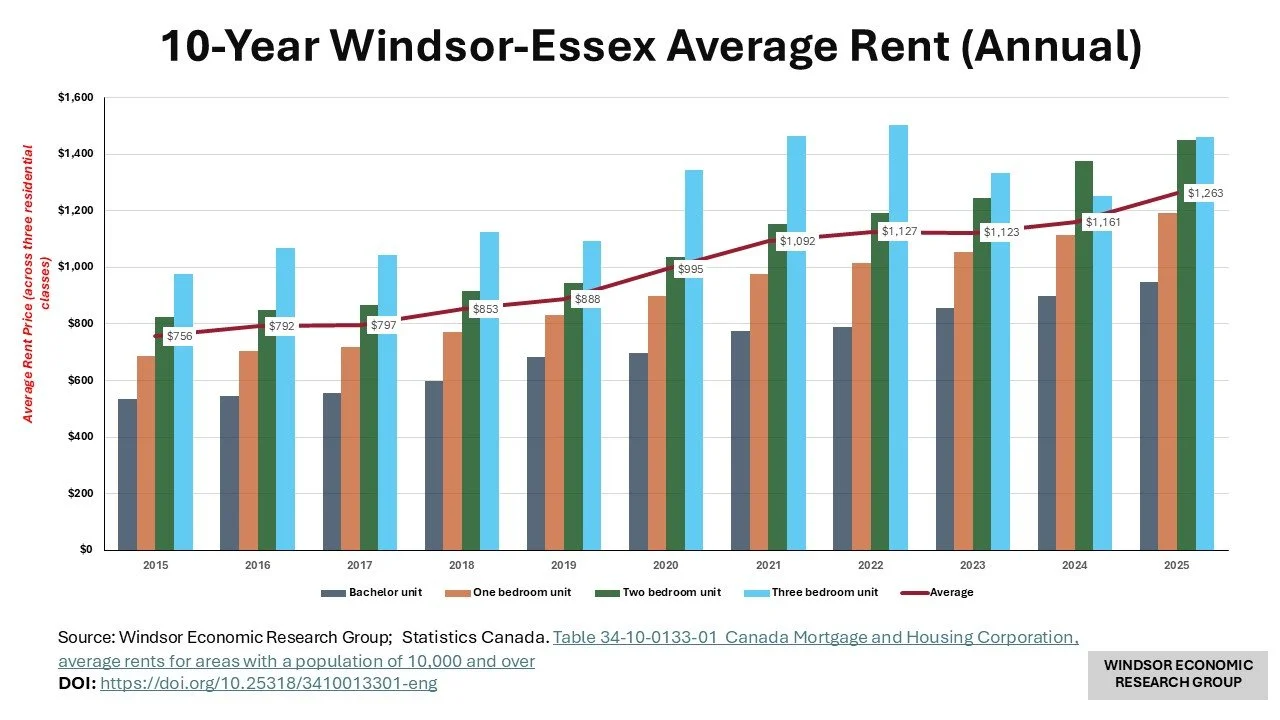
We begin by looking at how income and rent have increased over the past 10 years:
Key Findings:
Median income increased by approximately 29%, rising from $33,380 to $43,117.
Average rent increased by approximately 67%, rising from $756/month to $1,263/month.
Simply put, the data show a decrease in rental affordability across Windsor between 2015 and 2025. Rents have grown more than twice as fast as incomes over the last decade.
Accessing Rent Burden
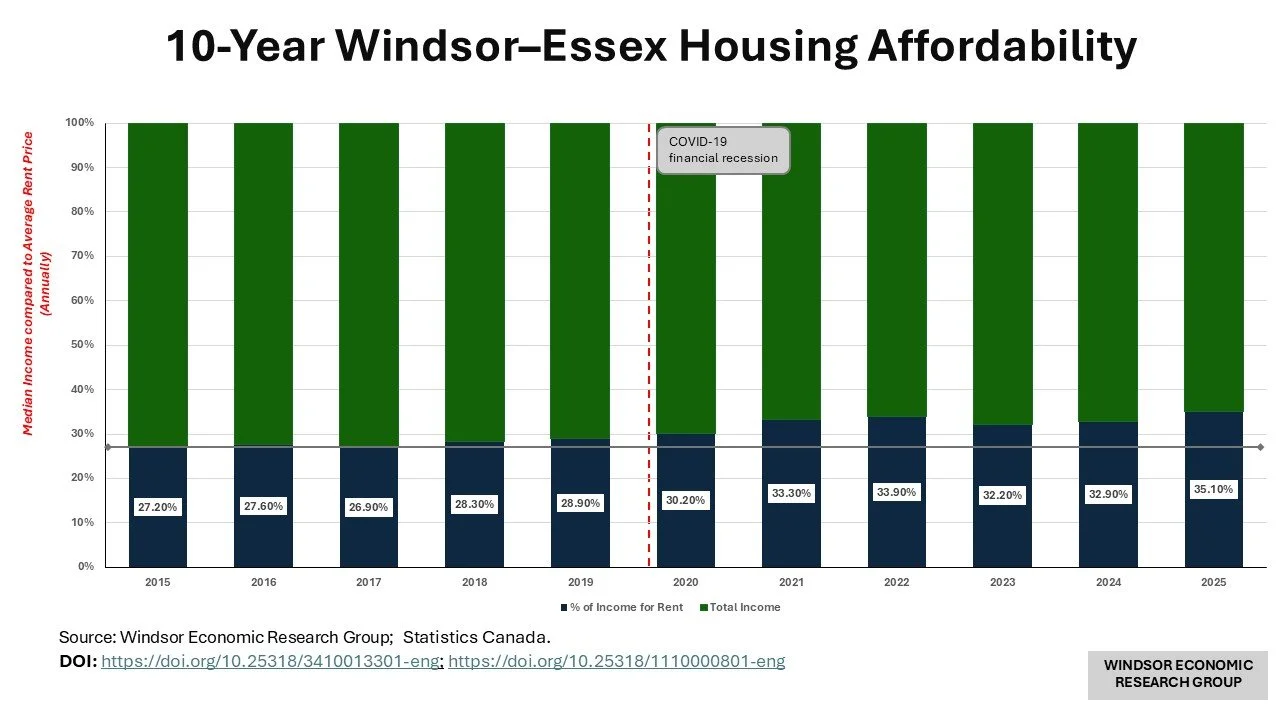
Approach: We assess rent affordability by estimating what percentage of income Windsor residents can expect to spend on rental housing. I.e., the blue bar below shows the percentage of income a resident can expect to dedicate to paying for rental housing.
Key Findings:
In 2015, the average Windsor renter would have needed to spend approximately 27% of income on rent.
By 2025, that figure had increased to approximately 35% of income on rent (an increase of roughly 8%)
The share of income required to rent in Windsor was approximately 29% higher in 2025 than in 2015.
However, Windsor is not an anomaly. Rental housing costs have risen across Ontario. In fact, in other cities, rental affordability may be considerably worse than in Windsor. This area, we would be exploring in Part II of our research series
Additional Researcher Notes:
The most significant decline in affordability occurred after 2020. While median incomes continued to rise gradually, rents increased sharply during the pandemic and post-pandemic.
The result was a widening gap between earnings and housing costs:
Income growth remained modest and rental prices surged.
Result = Housing consumed a larger share of household budgets.
Although affordability improved slightly in 2023 and 2024 compared with the 2022 peak, conditions have not caught up to pre-pandemic levels.
We do not use average income and rather stick to median income in this analysis. For this analysis, we believe Median income is a better measure than average income as median income is not distorted by a relatively small number of very high earners and therefore provides a more accurate picture of what a typical resident earns.
Calculated using average market rent and median total income of tax filers. Values represent a city-wide affordability indicator and should not be interpreted as the actual rent burden of the median renter.
